Learn how often is vr used by children and adults, how long VR sessions should last, when to take breaks, and what signs mean it is time to stop.

Virtual reality can feel like a special activity one day and part of a normal routine the next.
That difference is why many parents and users ask, how often is vr used and whether there is a point where VR becomes too much.
Some people use a headset once a month for entertainment, while others use it several times a week for gaming, training, education, or therapy.
No single number works for everyone.
The right frequency depends on age, the type of VR experience, session length, comfort, and what else the person needs to do that day.
If you are looking for things to do in Rhode Island, VR may be one option among many family activities, but it should fit into a balanced day rather than replace sleep, exercise, schoolwork, or time with other people.
Let’s understand exactly how VR is used so we can easily set reasonable limits.
How Often Is VR Used?
No universal rule says everyone should use VR a certain number of times each week.
VR is used in many different settings, including:
- Gaming and entertainment
- Education and training
- Healthcare and therapy
- Workplace simulations
- Fitness and exercise
- Social experiences
A person playing a short VR game on the weekend has a very different type of exposure from someone using VR for training every weekday.
For children, the American Academy of Pediatrics says research on VR safety is still limited.
It recommends reasonable time limits, adult guidance, breaks, and making sure VR does not replace important activities such as physical activity, homework, family time, and sleep.
How Often Should Kids Use VR?
For children, how often is vr used is better answered by looking at the whole day rather than counting only VR sessions.
There is currently no strong evidence supporting one exact number of VR sessions per week for every child.
Age and the type of experience matter.
Parents can consider:
- How long each session lasts
- Whether the child feels comfortable
- Whether the child gets enough physical activity
- Whether VR affects homework or sleep
- Whether the child still spends time with family and friends
- Whether the VR content is suitable for their age
The American Academy of Pediatrics notes that children may have difficulty recognizing when their eyes or body need a break.
Adult supervision can therefore be useful, especially for younger children.
A 2024 systematic review of VR safety in children under 14 found that research is still limited.
The available studies suggest that short, supervised exposure has not shown major harm, but mild cybersickness can occur and more research is needed on repeated exposure.
How Long Should a VR Session Last?
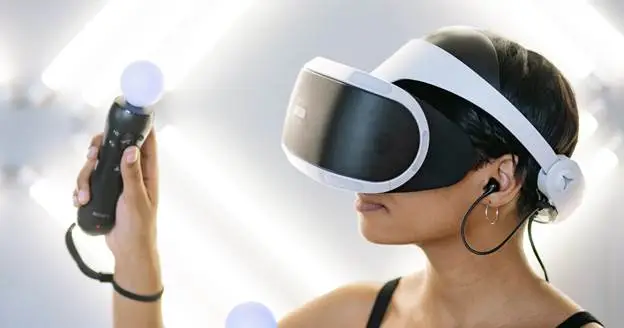
Frequency and session length are connected.
Using VR three times a week for 20 minutes is very different from using it three times a week for three hours.
Long sessions may increase the chance of problems such as:
- Nausea
- Dizziness
- Headaches
- Eye discomfort
- Fatigue
- Neck discomfort
- Feeling disoriented
The AAP recommends taking substantial breaks between VR sessions, with about 15 minutes between sessions suggested to help reduce cybersickness.
Research also shows why breaks matter.
In one study involving children ages 4–10, participants completed two 30-minute VR sessions.
Some reported increased eye discomfort, fatigue, head or neck discomfort, and motion sickness after the exposure.
This does not mean that a 60-minute session is automatically unsafe.
It shows why users should pay attention to how their body responds.
Does Age Affect VR Use?
Age is an important factor when deciding how often is vr used.
Younger children may need closer supervision because they may not recognize or explain discomfort as quickly as older users.
Parents should also check the headset manufacturer’s age guidance.
Different headsets and VR platforms may have different age requirements.
For children, experience quality matters too.
A calm educational activity is not the same as a fast-moving game that causes dizziness.
Recent guidance from researchers working in pediatric extended reality also points to the need for age-appropriate design, supervision, comfort, and safety when children use immersive technology.
How Often Is VR Used for Exercise?
VR can also encourage movement.
Some experiences require users to:
- Squat
- Reach
- Punch
- Dance
- Dodge
- Move around a play area
This can make physical activity feel more like a game.
However, VR exercise should not automatically replace all other forms of physical activity.
A balanced routine can include outdoor play, walking, sports, strength activities, and VR-based movement.
For children and teens, the CDC recommends at least 60 minutes of physical activity each day for ages 6–17.
Signs You Are Using VR Too Often

Instead of focusing only on the number of sessions, watch for changes in how the user feels and behaves.
It may be time to reduce VR use or take longer breaks if someone regularly experiences:
- Dizziness or nausea
- Eye or head discomfort
- Neck pain
- Fatigue after sessions
- Trouble stopping when asked
- Less interest in physical activity
- Poor sleep
- Skipping homework or other responsibilities
Cybersickness often improves after VR stops, but repeated symptoms shouldn’t be ignored.
The AAP recommends breaks and adult guidance, while current research continues to examine the effects of repeated VR exposure.
How to Create a Healthy VR Routine
A good VR routine does not have to be complicated.
Try these habits:
- Start with shorter sessions.
- Take regular breaks.
- Stop if dizziness or nausea begins.
- Keep the play area safe and free of obstacles.
- Balance VR with movement away from the headset.
- Protect sleep, school, work, and family time.
- For children, use age-appropriate content and supervision.
These habits are more useful than chasing one perfect weekly number.
Conclusion
So, how often is vr used?
No single schedule fits everyone.
Adults may use VR for gaming, exercise, work, or training several times a week.
Children may use it less often and may need more supervision and shorter sessions.
What matters most is how long each session lasts, how the user feels, and whether VR is interfering with other important parts of life.
If VR causes dizziness, nausea, eye discomfort, or fatigue, stop and take a break.
For children, parents should also check age guidance and make sure VR remains one part of a balanced routine, not the main activity.