Is a new roof considered an improvement? Learn how roof replacement may affect home value, taxes, insurance, and your property’s cost base.
A new roof can make your home look better, protect it from water, and give you peace of mind.
But that does not always mean it is legally or financially considered an “improvement.”
In many cases, replacing an old roof simply restores the home to its original condition.
That difference matters, especially when you are thinking about taxes, a rental property, insurance, or the value of your home.
For example, if you are comparing quotes from roofing contractors in Brampton, you may be wondering whether the money you spend on the new roof counts as an improvement or just a repair.
The answer depends on why the roof was replaced, what was installed, and how the property is used.
A full roof replacement can be treated differently from a repair, and the tax rules can be different for a rental property and your personal home.
So, Is A New Roof Considered An Improvement?
Sometimes, but not automatically.
A new roof is often treated as a repair or maintenance expense when its main purpose is to replace a worn-out roof with a similar roof and return the property to its previous condition.
However, the work may be treated as a capital improvement when it goes beyond restoring the property and gives you a lasting benefit or improves the property beyond its original condition.
The Canada Revenue Agency (CRA) uses this general distinction when deciding whether a property expense is a current expense or a capital expense.
Renovations that extend a property’s useful life or improve it beyond its original condition are generally considered capital expenses.
That means the fact that you spent a lot of money on a new roof does not, by itself, make it an improvement.
When A New Roof May Be Considered A Repair
Think about a roof that is 20 or 25 years old.
The shingles are worn, a few areas leak, and the roofing system has reached the end of its useful life.
You remove the old shingles and install new shingles that provide similar protection.
In this situation, the main goal is to restore the roof, not upgrade the home.
The CRA gives a similar example involving roof repairs on a rental property.
In its rental income guidance, it explains that repairing and re-shingling sections of a roof to restore it to its original condition can be treated as a current expense.
So, a standard roof replacement does not automatically become a capital improvement just because you replaced the entire roof.
This is an important point if you are researching roofing contractors near me and trying to understand the financial side of a replacement.
When A New Roof May Be An Improvement
The situation can change when the new roofing system does more than replace what was already there.
For example, you might:
- Upgrade to a much higher-performance roofing system.
- Change the structure of the roof.
- Add features that were not there before.
- Make major changes that extend the property’s useful life beyond normal replacement.
- Replace the roof as part of a larger renovation project.
- Improve the property beyond its original condition.
The CRA says a repair that improves property beyond its original condition is likely to be a capital expense.
It also notes that a repair can still be considered a current expense even when newer materials or better workmanship are used, so the type of material alone does not decide the issue.
That last point is worth remembering.
Installing better shingles does not automatically mean the entire project is a capital improvement.
The overall purpose and nature of the work matter.
Why The Type Of Property Matters
Whether a new roof is considered an improvement can also depend on how you use the property.
There is a big difference between:
- Your personal home
- A rental property
- A property used for business
For a rental or business property, the tax treatment can be especially important.
If the roof work is a current repair expense, it may be treated differently from a capital expense.
If it is capital in nature, the cost may instead become part of the property’s capital cost and may be handled over time under the applicable tax rules.
The CRA explains that capital expenses generally provide a lasting benefit and are not normally deducted in full in the year they are incurred.
For depreciable rental property, the cost may instead be dealt with through capital cost allowance (CCA).
So, if you own a rental property and are planning roof repair in Brampton, do not assume that the invoice should automatically be treated as a regular repair expense.
Keep the records and ask a qualified tax professional how your specific project should be classified.
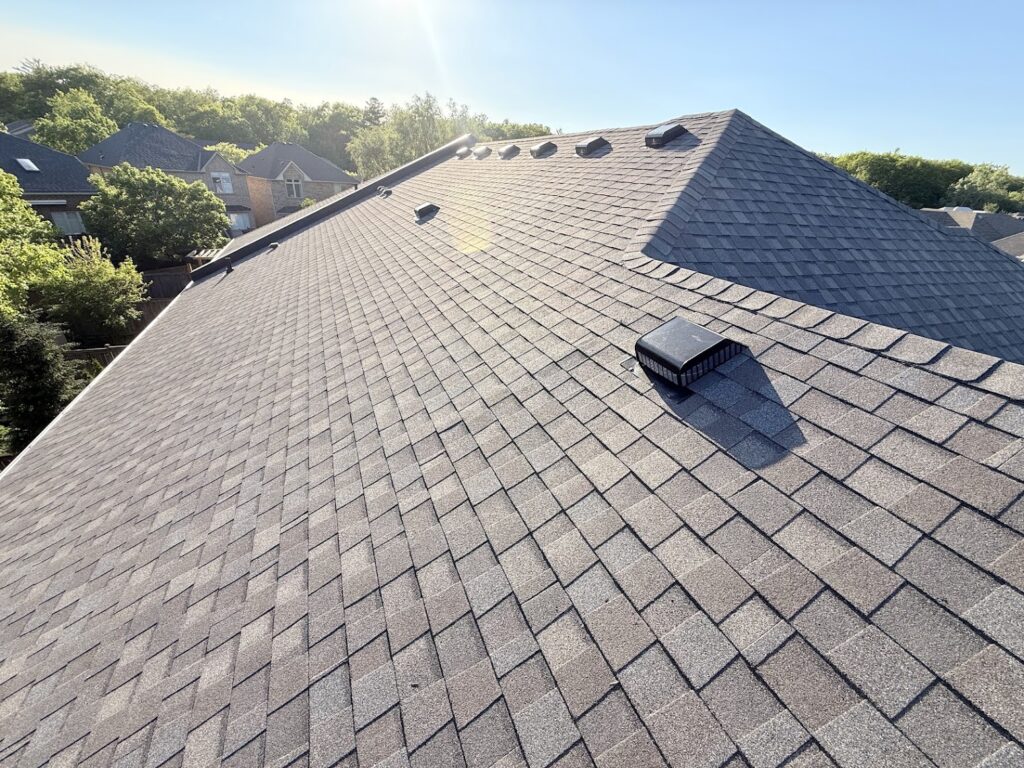
Does A New Roof Increase Home Value?
It can, but the amount is not always equal to what you spend.
A new roof can make a home more attractive to buyers because it removes one major concern.
Imagine you are buying two similar homes.
- Home A needs a new roof.
- Home B has a recently replaced roof with documentation.
Even if both homes are otherwise similar, many buyers will feel more comfortable with Home B.
A new roof can also:
- Improve curb appeal.
- Reduce the chance of leaks.
- Protect the home’s interior.
- Help prevent moisture damage.
- Make the home easier to sell.
- Give buyers more confidence in the property’s condition.
But you should not assume that spending $15,000 on a roof automatically adds $15,000 to your home’s market value.
Home value depends on many things, including location, size, condition, buyer demand, and the quality of the work.
Is A Roof Replacement Better Than Roof Repair?
That depends on the condition of the roof.
A repair may make more sense when:
- The roof is relatively young.
- The damage is limited.
- Most shingles are still in good condition.
- The underlying roof system is sound.
- The problem can be fixed without replacing the whole roof.
A replacement may make more sense when:
- The roof is near the end of its expected life.
- Leaks are happening in several places.
- Shingles are badly worn or damaged.
- There is widespread water damage.
- Repairs are becoming frequent.
- The roofing system has serious underlying problems.
Replacing a roof too early can waste money. But continuing to patch a roof that has reached the end of its useful life can also become expensive.
Conclusion
The biggest takeaway is this:
A new roof is not automatically considered an improvement just because it is new or expensive.
If you are replacing an old roof to restore the property to its previous condition, it may be treated as a repair or maintenance expense.
If the project goes beyond restoration and improves the property in a lasting way, it may be considered a capital improvement.
If you are dealing with a rental property, business property, or a home with mixed personal and rental use, the tax consequences can be more complicated.
In those cases, speak with a Canadian tax professional before filing your return.